Advanced ultrafast spectroscopy
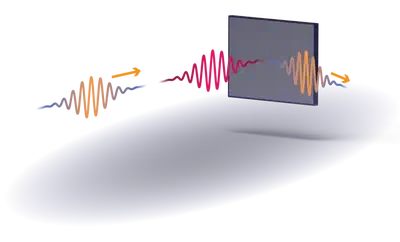
Ultrafast spectroscopy with few-femtosecond dispersive waves
We collaborate with multiple world-renowed ultrafast spectroscopy groups on the use of our light-source technologies for new discovery science. In particular, the use of our HISOL concept is one of the best ways to get bright few-femtosecond pulses tunable across the vacuum and deep ultraviolet, and we are installing HISOL systems in research facilities and research groups worldwide.
](/project/uvspec/morpholine_hu_5f96b6f34e39d8f7.webp)
Few-femtosecond dispersive waves can be combined with any number of other ultrafast light sources, from short infrared pulses to attosecond x-rays. We are also working to integrate HISOL sources with major facilities, such as x-ray free-electron lasers like LCLS and the European XFEL.
](/project/uvspec/imperial_hu_6d3b25bb9abbbda6.webp)
In our own laboratory, we have demonstrated the use of ultrabroadband self-compression probe pulses in combination with few-femtosecond resonant dispersive waves in studying condensed matter physics with unprecedented time resolution and bandwidth. This approach has also found applications in transient absorption spectroscopy of photochemical processes in the liquid phase.
](/project/uvspec/vo2_hu_61249278df2746d5.webp)
FASTER: Ultrabroadband optical attosecond spectroscopy enabled by soliton self-compression
The FASTER project, led by Christian Brahms, aims to bring attosecond time resolution to ultrafast spectroscopy experiments in the optical region of the electromagnetic spectrum—the ultraviolet, visible and infrared. In contrast to extreme-ultraviolet attosecond science, which was recognised with the Nobel Prize in Physics 2023, this will allow us to study ultrafast dynamics entirely with non-ionising radiation and without resorting to strong-field excitation or probing. We will create the required optical attosecond pulses by building on the work of the HISOL project. With tailored soliton dynamics in hollow-core waveguides, we will transform femtosecond pulses in attosecond ones. These will be then be used in ultrabroadband optical attosecond spectroscopy experiments on a variety of samples, starting with condensed-matter targets.